Friday, June 19, 2015
Our Unifying Creaturehood
Sunday, June 21 has been declared an International Day of Yoga. On Sunday yogis- disciplined instructors, first-timers, Hindus, Christians, atheists, athletes, Netflix marathoners- will set aside arguments and commune in asanas.
Yoga is breath. If you can breathe, you can practice yoga. Every day, every moment we humans already breathe together. Sunday is the day we acknowledge this shared breath. We will unify our bodies with intentional air, and if only for a moment, unify our spirits. Yoga practitioners the world over will exhale our differences and inhale our common existence, our unifying creaturehood.
On Sunday, I promise to devote a few moments to consider my unavoidable unity to six billion other humans and trillions of other creatures. I will find some time to contemplate the meaning of this bond and the responsibility it creates.
Inhale. Two. Three Four. Exhale. Three. Two. One.
Thursday, April 16, 2015
Review: The Girl on the Train by Paula Hawkins
Rachel Watson takes the train into London every day, sits in the same compartment, stops at the same train signals, and observes the same trackside houses at these daily standstills. One in particular holds her attention because it holds what Rachel imagines to be the perfect couple. For a year she sees them through her compartment window several times a week. She watches them out on their back terrace living life as though unnoticed, drinking coffee or wine, talking or holding hands. Rachel constructs a narrative for them by piecing together the style of clothing she sees them wearing, the body language she observes, and most importantly, the life and marriage she feels she used to have. She projects on her almost fictitious couple the idealized, sunshiny life she has longed for since her divorce. One day Rachel observes something at her idyllic couple's house that jars her and then intertwines her in a thrilling mystery when the wife goes missing the very next day.
The idea of feeling connected to people you've never met simply because you have a rear window glimpse into their lives is a story seed that would make Alfred Hitchcock proud. The main narrator Rachel is more than just a passive onlooker or busybody, however. This character's alcoholic tendencies are worthy of Stephen King's praise, and together with her persistent love for her ex-husband, Rachel dumps a lot of her own baggage into this unsolved case. To hide her drinking problem and its consequences, Rachel has become used to telling lies, but the missing woman, who is a secondary narrator, has many secrets and lies of her own.
Without spoiling anything, I want to comment on the feminism of The Girl on the Train. The message on traditional gender roles is subtle at first but eventually comes forward as an important final note. Throughout the novel, Hawkins' female characters all see their worth through the eyes of men. As the story comes to a close, though, they all seem to find some level of personal strength to do what they know they have to do. In confronting their individual fears of rejection in some form, they take one firm step towards emancipating themselves from the destructively limiting gender roles which they had previously fully accepted. (Come back to this after reading it, and hopefully it will make sense.)
The Girl on the Train is for the Gone Girl fanatic and adversary alike. As someone who only saw the film adaptation of Gone Girl without reading the book, I have placed myself squarely in the second- and unpopular- camp of people disappointed with Gone Girl. The movie version of Gillian Flynn's thriller had an interesting plot set-up but it was littered with inhuman, unrealistic characters that I found confusing and frustrating. The Girl on the Train deals with similar themes of trust and envy within marriages but does so through believable motives maintained by flawed and fallible characters. Both thrillers tell stories of wildly imperfect people but Hawkins manages to keep her female characters relatably, sympatheticly human.
In short, The Girl on the Train is absolutely craveable. From the very first page, the pacing of the thriller is impeccably timed. Hawkins feeds the reader a juicy new detail at exactly the right time and just when that bit has started to digest, the next exciting little piece of information is presented. Be prepared to forego all responsibilities until this book is finished, and then be prepared to scour bookshelves for something similar to fill the new void.
Tuesday, March 31, 2015
Review: A Girl is a Half-formed Thing by Eimear McBride
In March I always start to long for some beautiful, melancholy Irish literature. Something to read while munching on Irish soda bread. This year this crazy novel made the cut. If you remember, it's been on my list for a while. If you don't think it sounds like your thing, I still stand by these Irish reads.
A Girl is a Half-formed Thing is a story about love, although the theme is highlighted more by a lack of love and kindness rather than an abundance of it. The protagonist begins her narration in the womb hearing events unfold, or imagining she remembers them unfolding, and thus claims presence at the most defining moment in her family's life: when her older brother is diagnosed and treated for brain cancer as a toddler. The story follows this young Irish woman's memory of her childhood. She is retelling it in honest fullness to her brother whose survival of the brain tumor left him partially intellectually disabled, and this fact shapes so much of her own story.
Her brother is the only person with whom the protagonist seems to truly sympathize. The affection between the siblings is the only love she experiences. Her father left the family shortly after her brother's cancer treatment as a small child, and their mother is usually cold and at times abusive. The only compassion within the family comes from the protectiveness the sister feels for her older brother.
This half-formed girl searches for love in other places and uses sex to escape everything she deals with at home, from shame and loneliness to fear and pain. Events at home force her to confront these feelings and it becomes obvious that compassion for her brother is the only love she has ever offered.
The writing is raw with half-formed sentences, and a thick Irish accent infects your internal narrator almost instantly. The phrases are cryptic as lines of poetry. There are no commas to guide you, no quotation marks or new paragraphs to signal a character's speech. Nouns are verbs or there are no verbs at all. It takes a while to get used to McBride's version of English. I had to reread the first few chapters to fully understand the scenes. This linguistic anarchy is as close to real human thoughts as I have ever read. Once you get into the rhythm, your mind recognizes its own scattered, mashed-up way of speaking to itself.
This novel is uncomfortable, difficult, ragged, and ultimately thought-provoking and rewarding.
Wednesday, February 25, 2015
Review: Yes Please by Amy Poehler
Let's all agree that Amy Poehler is adorably great. I love the shows she has appeared in (Arrested Development), starred in (Parks and Recreation), and produced (Broad City). She never seems to hold back, always giving an honest and unapologetic performance, especially as Leslie Knope in Parks and Rec. After reading the cover of Yes Please in Target, I decided it had enough Poehler fun and honesty to check out from the library.
Before I go any further, I really need to confess that the blatant disregard of that comma in the title upsets me. This irritation has not lessened over time, and if I had not finished this book and this post sooner, I really cannot say what might have happened.
I have read very few memoirs. In fact, I'm not entirely sure what a memoir is. The only one I know I've read for sure is the wonderful The Glass Castle because it told me it was "a memoir" right on the cover. Having never read a comedian's memoir before, I did not really know what to expect. It was a collection of the experiences that have led her to this moment, the moment where she is famous enough and old enough to write an entire book about her journey and have people actually interested in reading it. A criticism I had while nearing the end was the question of audience. Who exactly was supposed to be reading this? It seemed like a very long letter to Poehler's closest friends, which provided a nice intimate tone but felt slightly exclusionary. Then after reading this great review, I agreed with this blogger that Amy Poehler was writing for herself.
Yes Please reads almost more like an advice book than a memoir, and there were several quotes or mottoes that resonated with me. A favorite about knowing her own tricks: "I am really onto myself. I've got Amy Poehler's number." Another, in regards to choices women have to make as parents and career people: "Good for you. Not for me."
This book was quick, mostly light, and funny with a lot of charming photos. If you like Poehler, you should read it and become your friend circle's Amy Poehler expert. And if you've never checked out her "Smart Girls at the Party" video clips on her website, go! Do it! Here are some good ones:
Before I go any further, I really need to confess that the blatant disregard of that comma in the title upsets me. This irritation has not lessened over time, and if I had not finished this book and this post sooner, I really cannot say what might have happened.
I have read very few memoirs. In fact, I'm not entirely sure what a memoir is. The only one I know I've read for sure is the wonderful The Glass Castle because it told me it was "a memoir" right on the cover. Having never read a comedian's memoir before, I did not really know what to expect. It was a collection of the experiences that have led her to this moment, the moment where she is famous enough and old enough to write an entire book about her journey and have people actually interested in reading it. A criticism I had while nearing the end was the question of audience. Who exactly was supposed to be reading this? It seemed like a very long letter to Poehler's closest friends, which provided a nice intimate tone but felt slightly exclusionary. Then after reading this great review, I agreed with this blogger that Amy Poehler was writing for herself.
Yes Please reads almost more like an advice book than a memoir, and there were several quotes or mottoes that resonated with me. A favorite about knowing her own tricks: "I am really onto myself. I've got Amy Poehler's number." Another, in regards to choices women have to make as parents and career people: "Good for you. Not for me."
This book was quick, mostly light, and funny with a lot of charming photos. If you like Poehler, you should read it and become your friend circle's Amy Poehler expert. And if you've never checked out her "Smart Girls at the Party" video clips on her website, go! Do it! Here are some good ones:
Saturday, February 14, 2015
Cookie Butter Hot Chocolate
Happy V Day, sweet people!
In the spirit of V Day, I want you to do something for me. Do something today to show yourself that you love you. Maybe it's watching your favorite movie. Maybe it's spending the day with your favorite person. Maybe it's making a donation to an organization that means a lot to you. Maybe it's wearing your favorite outfit or getting that ear piercing you've really been wanting. Maybe it's doing yoga and drinking more water. Maybe it's making a cup of cookie butter hot cocoa for you and your Galentine.
Yesterday I made this hot cocoa for my Galentine Jill. This recipe came from an intense need for cookie butter and a severe lack of pretzels. While gingerbready cookie butter goes great with spoons, that seemed like a lazy Galentine's treat. The gingerbread flavor is subtle but adds creaminess and a bit of spice. Try it; it's nice.
Cookie Butter Hot Cocoa
makes two
2 1/2 cups milk (any kind)
4 tablespoons cocoa powder
3 tablespoons Speculoos cookie butter
2 tablespoons agave nectar or white sugar
whipped cream or marshmallows
Put the first four ingredients in a saucepan and heat on low, whisk til the cookie butter and cocoa powder are incorporated. Pour into two cute matchy mugs and swirl in ice cream-like Cool Whip or float tiny marshmallow dots.
Remember how wonderful and lovely you are, wear cozy socks, and sip chocolate when you aren't eating it. Happy Valentine's Day!
In the spirit of V Day, I want you to do something for me. Do something today to show yourself that you love you. Maybe it's watching your favorite movie. Maybe it's spending the day with your favorite person. Maybe it's making a donation to an organization that means a lot to you. Maybe it's wearing your favorite outfit or getting that ear piercing you've really been wanting. Maybe it's doing yoga and drinking more water. Maybe it's making a cup of cookie butter hot cocoa for you and your Galentine.
Yesterday I made this hot cocoa for my Galentine Jill. This recipe came from an intense need for cookie butter and a severe lack of pretzels. While gingerbready cookie butter goes great with spoons, that seemed like a lazy Galentine's treat. The gingerbread flavor is subtle but adds creaminess and a bit of spice. Try it; it's nice.
Cookie Butter Hot Cocoa
makes two
2 1/2 cups milk (any kind)
4 tablespoons cocoa powder
3 tablespoons Speculoos cookie butter
2 tablespoons agave nectar or white sugar
whipped cream or marshmallows
Put the first four ingredients in a saucepan and heat on low, whisk til the cookie butter and cocoa powder are incorporated. Pour into two cute matchy mugs and swirl in ice cream-like Cool Whip or float tiny marshmallow dots.
Remember how wonderful and lovely you are, wear cozy socks, and sip chocolate when you aren't eating it. Happy Valentine's Day!
Monday, February 2, 2015
Review: Breakfast at Tiffany's by Truman Capote
Narrated by an unnamed young man who moves into Holiday Golightly's humble New York apartment building, the novella Breakfast at Tiffany's is an account of Miss Golightly's last months in New York City as told from her quiet upstairs neighbor's perspective. "Fred", as Holly calls him, chronicles their friendship from the aspiring writer's move-in to the first time Holly climbs in through his window in escape of a drunken, boring lover. He ends his story with the last time he ever sees this woman, mysterious as she is stylish, as she flees the city in a lonely taxi.
I was excited to find that Breakfast at Tiffany's reminded me of The Great Gatsby in a lot of ways. Capote's nameless first person narrator is a peripheral one very similar to Nick Carraway. Both are the young, introverted, and slightly aimless new neighbors of two seriously chic characters.
Holly Golightly's personality could be considered a combination of those of Daisy Buchanan and Jay Gatsby. She is flighty and sweetly dismissive while being smooth and grandiose. One important difference out of many between Holly and Daisy is that Holly is a "liberated woman" of the 1940s who doesn't care what people think of her, and in fact, she enjoys shocking them.
Both Mr. Gatsby and Miss Golightly fuel their exciting lifestyles with money earned in less than honest ways. They both move to New York City and alter their names to hide the lowly pasts that embarrass them, but they trust their stories' narrators enough to admit their secret histories. Nick Carraway and "Fred" are fascinated by their melancholy neighbors, and though they disapprove of many of their decisions, their concern for them, whether motivated by pity or friendship, is apparent.
I didn't read this book. I listened to someone read it to me. Breakfast at Tiffany's was one of the first audio books I have ever listened to, but they feel familiar because they remind me of my mom reading aloud to my sisters and me. They remind me of sitting around the living room, or more often squished in one chair, listening to the tales of Laura Ingalls Wilder and Louisa May Alcott. My mom made sure to read us stories about brave, hard-working, and compassionate girls, and Jill and I would daydream about living in a log cabin and wearing bonnets and lace-up boots and having a fourth sister who died of scarlet fever. You know, all that fun 1800s stuff.
With audio books, the work of reading is gone and you are a kid again with few responsibilities. (Just kidding, you still have to do the dishes, but at least you can listen to the audio book while you wash!) While audio books manage to feel both nostalgic and time-efficient, I have noticed that I don't hold on to the details of the story as well when I don't have the visual memory component of words on a page. Still, audio books are great for "reading" books I probably wouldn't have read to myself.
Breakfast at Tiffany's was one such book. I once saw the opening of the film adaptation, but I wasn't very interested in Holly Golightly beyond Audrey Hepburn's iconic black dress and dark shades. Nevertheless, when Breakfast at Tiffany's popped up as my first Audible suggestion, I decided to give it a listen, and with the great dialogue that dominates this short novel, it turned out to be a great choice.
I was excited to find that Breakfast at Tiffany's reminded me of The Great Gatsby in a lot of ways. Capote's nameless first person narrator is a peripheral one very similar to Nick Carraway. Both are the young, introverted, and slightly aimless new neighbors of two seriously chic characters.
Holly Golightly's personality could be considered a combination of those of Daisy Buchanan and Jay Gatsby. She is flighty and sweetly dismissive while being smooth and grandiose. One important difference out of many between Holly and Daisy is that Holly is a "liberated woman" of the 1940s who doesn't care what people think of her, and in fact, she enjoys shocking them.
Both Mr. Gatsby and Miss Golightly fuel their exciting lifestyles with money earned in less than honest ways. They both move to New York City and alter their names to hide the lowly pasts that embarrass them, but they trust their stories' narrators enough to admit their secret histories. Nick Carraway and "Fred" are fascinated by their melancholy neighbors, and though they disapprove of many of their decisions, their concern for them, whether motivated by pity or friendship, is apparent.
I didn't read this book. I listened to someone read it to me. Breakfast at Tiffany's was one of the first audio books I have ever listened to, but they feel familiar because they remind me of my mom reading aloud to my sisters and me. They remind me of sitting around the living room, or more often squished in one chair, listening to the tales of Laura Ingalls Wilder and Louisa May Alcott. My mom made sure to read us stories about brave, hard-working, and compassionate girls, and Jill and I would daydream about living in a log cabin and wearing bonnets and lace-up boots and having a fourth sister who died of scarlet fever. You know, all that fun 1800s stuff.
With audio books, the work of reading is gone and you are a kid again with few responsibilities. (Just kidding, you still have to do the dishes, but at least you can listen to the audio book while you wash!) While audio books manage to feel both nostalgic and time-efficient, I have noticed that I don't hold on to the details of the story as well when I don't have the visual memory component of words on a page. Still, audio books are great for "reading" books I probably wouldn't have read to myself.
Breakfast at Tiffany's was one such book. I once saw the opening of the film adaptation, but I wasn't very interested in Holly Golightly beyond Audrey Hepburn's iconic black dress and dark shades. Nevertheless, when Breakfast at Tiffany's popped up as my first Audible suggestion, I decided to give it a listen, and with the great dialogue that dominates this short novel, it turned out to be a great choice.
Tuesday, December 30, 2014
Defining Feminism
Feminism is making a comeback. It's especially talked about on social media, so much so that #womenagainstfeminsim has cropped up as well. I know feminism is truly awakening from its 1990s-2000s slumber if there is a sizable reaction against that movement. So in fact, I'm pretty thankful for these anti-feminist tweets and opinions because it means people are noticing a rise in support for feminism and want to discuss it.
At first I was really upset by the tweets and YouTube videos I found after searching #womenagainstfeminism on Twitter and Google a few months ago. In fact, this post was going to be a bit angry and argumentative. After talking to my very wise friend Megan, though, I realized that that is exactly what I don't need to contribute to the conversation. I think most of these women already know that without feminism they couldn't be doing what they are doing today (vote, own property, divorce, show some ankle, etc.). While I disagree with most of the women against feminism, I am most upset by the fact that this tweet debate shows that nobody really knows what feminism is. Feminists don't even really know. They argue about the definition and what it means to live your life as a feminist pretty much constantly. Does a woman have to throw away her razor and skirts to be considered a feminist? If a woman is a stay-at-home mom, is she a feminist? If a woman is a stripper, can she be included as a feminist? What are feminists fighting for, exactly? Whose rights? American women? [Insert race here] women? Lower-class women? Fat women? Transwomen?
While mulling this over, the terrible and wonderful my-professor-was-right-all-along hit me. In a feminist criticism course I took, the professor spent a lengthy amount of time discussing the relativity of feminism to modern women and if it can even be defined anymore. After all, there isn't one single and obvious reform to rally around like suffrage or even the Equal Rights Amendment. We discussed whether something needs a hard and fast definition to even exist. We talked about the severe negativity many people associate with "the other F word." We speculated that perhaps adopting a word like "equalist" would be a safer, more comfortable label. I disagreed with her at the time, thinking "equalist" was wimping out and making "feminist" even more of a "bad word". I thought the prof was suggesting that feminism as an active movement had come to a close and now all we could do was exchange high-fives and critique old literary pieces using historic, archaic feminist ideas.
Now my own internal feminist debate that has been storming most ardently in the past few weeks has come full circle and I find myself again looking at the ideas in Dr. C's feminist criticism class. Although now I feel I can see a bit more clearly into the murky, muddy puddle that is feminist theory. We need a definition of feminism. But who is authorized to give it?
A while ago I watched a TED talk given by Tavi Gevinson that grappled with the same issues. The precocious high school girl, who runs a fashion blog and considers herself a feminist, explains how she came to terms with all the contradictions that come with being a feminist, not to mention one obsessed with fashion. Feminism is incredibly complex and means something different to virtually every person who has encountered the word. So basically, you must define it for yourself. I know. That clears up very little. But I'll try to explain by giving my personal definition and some guidelines about finding your own feminism.
My definition of feminism is "total equality regardless of gender identification or sexual orientation". The way I measure this "equality" is based on the abolition of the assumption that we as humans possess any ownership over another human's body. Societal expression of this ownership assumption includes rape and sexual assault, body judgement and shame, oversexualization of the female (or male) body in media, and in other parts of the world women are still trying to declare freedom from body ownership in serious and basic ways, like genital mutilation and prearranged marriages that equate to goods exchanges. The second part of my definition is compassion. I know that a lot of women give back the hate they feel directed at them and call it feminism, but I don't subscribe to that. Compassion is the motivation for my feminism. The third part of my definition is that all women should be free to choose their own life. If they want to be mothers, they should be. If they want to chase a career, they should. If they want to do both, they should be able to without judgments made on their parenting. If they want to stay home and homeschool their kids and bake pies and sew clothes, they should be able to without judgment.
My guidelines for defining feminism are simple. Equality should be in your definition somewhere. Hatred should be left out of equal rights fights always. And feminism is not exclusive. It can't fully exist without also fighting racism and classism. It also intersects with gender spectrum issues and fat studies these days.
Sounds really idealistic, romantic, and other words for the opposite of realistic. But that's the thing. I want it to become a reality.
Monday, November 24, 2014
Review: The Dud Avocado by Elaine Dundy
Sally Jay Gorce, having just graduated college, is off on a Parisian adventure and her rich uncle is footing the bill. When we first meet her, she is spending her time doing nothing in particular. She stays out late with groups of American artists in French cafes some nights and others she spends in the arms of a married Italian man. Then she meets an old friend Larry, falls in love with him over an afternoon glass of wine, and does everything to get him to notice her, including audition for his play, in which she successfully performs. The book follows her around the artistic cafes and seedy gay night clubs of 1950s Paris and documents in Sally's own charming and hilarious words her trials and victories, her many lovers and various rivals.
Miss Gorce is a wonderful narrator because she is flawed and completely honest about it. She says, "I always expect people to behave much better than I do. When they actually behave worse, I am frankly incredulous." She has no delusions about herself and doesn't take herself (or anything) too seriously. She's not usually harsh with herself; she has brief pride when she accidentally does something well or kind and she fully admits mistakes and errors in judgement when she accidentally fails. She never gives herself too much credit, and she doesn't beat herself up about anything either. Sally Jay knows exactly who she is and what she's like, although she pretends not to. For a twenty-two-year-old woman, she cares surprisingly little what others think of her. She's in Paris to party. Sally Jay does what she wants.
This spirited gal could win a lot of hearts, but I can see people of the theatre especially loving Sally Jay to death. She is a new and talented actress after all, so I feel like she could be a theatre major's best friend. She's dramatic yet along for the ride.
The Dud Avocado is considered a coming-of-age story and what better example of finding oneself than a student abroad. But this novel is light-years more lighthearted than The Bell Jar or The Perks of Being a Wallflower. It is also very different from every other coming-of-age story I've read because the conclusion leaves you wondering if Sally Jay did actually come of age. The unsatisfying and semi-blunt ending suggests that she did not really learn her lesson. In fact the story ends with Sally Jay heading to Japan, possibly to relive her crazy traveler's adventures. The last sentence is Sally's declaration "It's zymotic," of the Japan trip. "Zymotic" could have be 50s slang or just Sally Jay slang, but literally it is a 1800s adjective for a very infectious disease. Elaine Dundy could be referring to the return of Sally Jay's fever for travel, but she also might mean that she has been infected with the same quick trustfulness that got her into trouble in France.
What probably got this carefree and unassuming literary work a reprinting after half a century is its honest voice and Dalmatian spots of wisdom. For example, this line in particular pops into my head at almost every social event I've been to since reading this book: "I mean, the question actors most often get asked is how they can bear saying the same things over and over again night after night, but God knows the answer to that is, don't we all anyway; might as well get paid for it."
(Hooray for marking The Dud Avocado off my list! What's next? Frankenstein and A Beautiful Mess book club November selection, Lena Dunham's new essays.)
Friday, October 31, 2014
Your queue: Halloween Netflix Recommendations
Happy Halloween, boys and girls!
And happy birthday, Heroine Jones!
A little over a year ago, I kicked off this bookish blog with a list of classics for Halloween, but a lot of good that list will do you today. It's Halloween right now. You don't have time for books!
But I bet you might watch something terrifying tonight. And if you don't have something in mind, I'm here to help you out, boys and girls.
Jarrod has a soft spot in his heart for horror films, zombies, and anything Stephen King, and while I have come to enjoy Stephen King and most horror films are manageable with an unmentionable amount of wine, I have found that I really prefer psychological thrillers to classic horror films. You know the real creepy ones that leave you feeling slightly ill? The ones that went where you weren't ready to go?
That's what this list is about. I've put some movies I've streamed from Netflix recently on a creepy continuum, starting with the safest and ending with the weirdest things I've possibly ever seen. These aren't the heart-pounding, armrest-gripping, involuntary-jumping scary movies. These are the creepy ones that a lot of Netflix scary movie round-ups I've seen have forgotten. And remember that creepy doesn't often coincide with Academy Awards, so buckle up.
Creepy Fun
The Nightmare before Christmas (1993)
I bet you've seen this movie already, but I'm here to remind you it's available on Netflix. Tim Burton is so good at making you feel a little uncomfortable without feeling like you can never be in a room alone again, and this is the kid version of that, so it's totally safe. It's just some good family fun with wonderful music and a cute ghost dog.
Corpse Bride (2005)
Tim Burton again with another melancholy kinda-dead girl hopelessly in love with a tall, skinny guy. There's also an arranged marriage gone morbidly wrong and some more fun musical numbers.
Creep Only a Cult Could Love
Donnie Darko (2001)
Cult classic. Troubled boy. Rogue airplane engine. Pills. Adult bunny costume. Last day of earth scheduled for Halloween. Kinda creepy but you'll be fine afterwards.
A Young Doctor's Notebook (2012)
A British miniseries with Daniel Radcliffe as a doctor in his residency in a small village hospital and Jon Hamm as the older morphine-addicted version of Radcliffe (that guy grew about a foot from his late 20s to his 40s! Remarkable!) This is for people who are into dark British humor and comically gory surgery scenes. Normally I wouldn't recommend this since I'm not sure if I ended up really liking it that much, but it could be a funny, gross 90-minute series to watch on Halloween. (Has anyone seen this besides me? I haven't heard anyone talk about it. What did you think of it?)
Creepy Mysteries
The Paperboy (2012)
Not so much horror as suspense, this movie has Nicole Kidman, John Cusack, and Zac Efron, along with Matthew McConaughey in a role similar to his Mud character and set in swamp country like True Detective. Kidman's character is in love with an incarcerated creep who was wrongly convicted for the murder of a sheriff. Efron and McConaughey are brothers who get caught up in the case with a journalist friend. Despite its great cast, The Paperboy did not get rave reviews across the board, but I found it interesting and definitely creepy.
Girl with the Dragon Tattoo (2011)
Decades-old rapes, murders, and a disappearance mystery center around one unusual family in a small Swedish town. A male journalist and a gifted but troubled girl team up to solve this creepy mystery by delving into a creepy family's past. (Heads up, there's a lot of weird sex stuff in this one, and actually The Paperboy has some, too. This is the Creepy Mysteries with Some Weird Sex Stuff category, I guess.)
Creepiest Movie Ever Candidate
We Are What We Are (2013)
Proof that a scary movie can be made on a tiny budget, this independent film will leave you horrified. Two socially-isolated sisters are forced to carry out their cannibalistic family's absurd interpretation of a Bible passage. The ending will sort of make you wish you'd never watched it, which means it's probably a great film for Halloween. Watch this one at your own risk.
Skip the candy and go straight for this salted caramel apple martini.
Monday, October 20, 2014
Literary Criticism Matters
Recently I've been contemplating life questions like why write books, why read books, why talk about books, why bother to write posts containing my humble thoughts on books. As an English degree-holder, I'd like to think that I did not waste my time and (parents') money getting a degree in literature and writing. Any degree from a good school that teaches critical thinking and communication skills is time well spent, but was the actual literary criticism I spent so much time on meaningful? Was my undergraduate paper on the color white in a Kate Chopin short story important? Maybe not, but I believe that criticism of literature definitely is.
The difference between a simple judgment and a thoughtful critique were reinforced in my mind by two articles shared with me by my old professor a year ago while discussing criticism and the philosophy thereof. The articles, one by Daniel Coffeen and one by Sam Anderson, preach the importance of giving back to the art and the artist by engaging in a conversation with the work of art, about how it fits in with other works, what new things it brings to the world, and in what different directions the work could continue its journey.
Criticism requires more than just clicking a “Like” button and moving on, which is what most of us are used to doing. A quick yay or nay. In addition, Anderson states that in order for people to take notice of books and book criticism in a world of “Like” buttons, the critic must be an excellent writer and treat criticism as an art in itself. And Coffeen says that criticism demands "a lending of oneself to the performance of another." Truly art criticism is an art all its own, since the critic and the artist go through the same process: they react to a stimulant, organize the reaction and collect their thoughts, convey these thoughts in creative expression, and prod a reaction out of others, too.
English majors, don't feel bad about your choices as young college students to take on the monstrous task of telling famous writers and poets what worked in their art piece and what didn't. More realistically, you are telling your professors and classmates these things, but it nevertheless enriches the literary experience of fellow readers and furthers artistic growth in the world. It matters.
Friday, October 10, 2014
Homemade Apple Cider
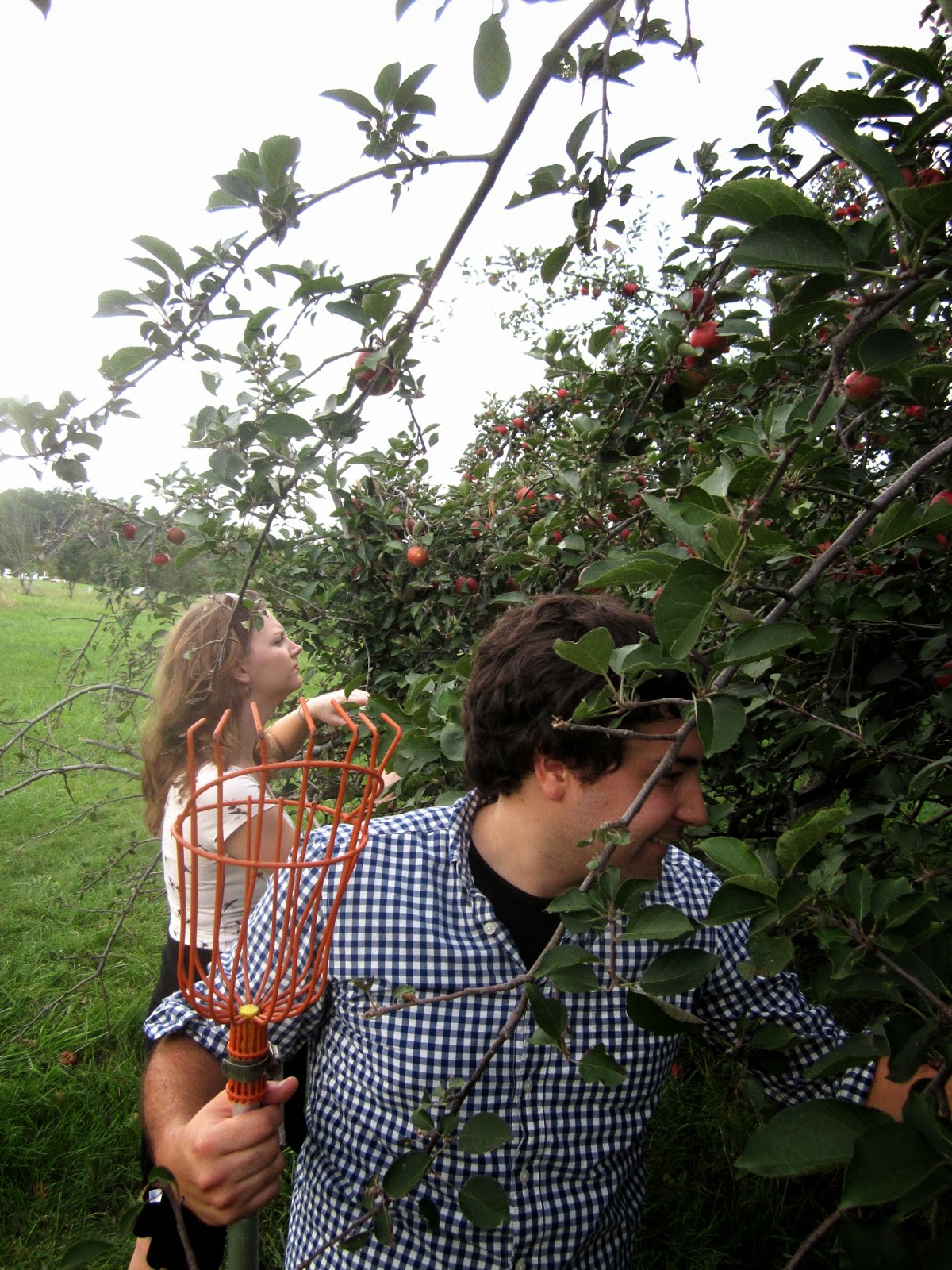
A couple of weekends ago, Matt, Jill, Jarrod, and I put on fall festive flannels and boots, crammed into backseats and front seats, and drove 25 miles south of dear old Kirksville to West Orchards for some crisp, red fun.
When we arrived we realized we were there an hour and a half too late, but thanks to some bees that decided to swarm, the kind and jolly owner was still around. Fall's version of Santa gave us a quick tour of the various types of apples he grew and where to find them, took our $12, and let us loose upon his orchard.
Though overcast, it was the best weather. After picking Jonagolds, Honey Crisps, Red Delicious (not at all like the store-bought), and little red Libertys, we played a little baseball with the fallen fruit. We loaded up Matt's car with our harvest and drove north in the perfectly setting sun.
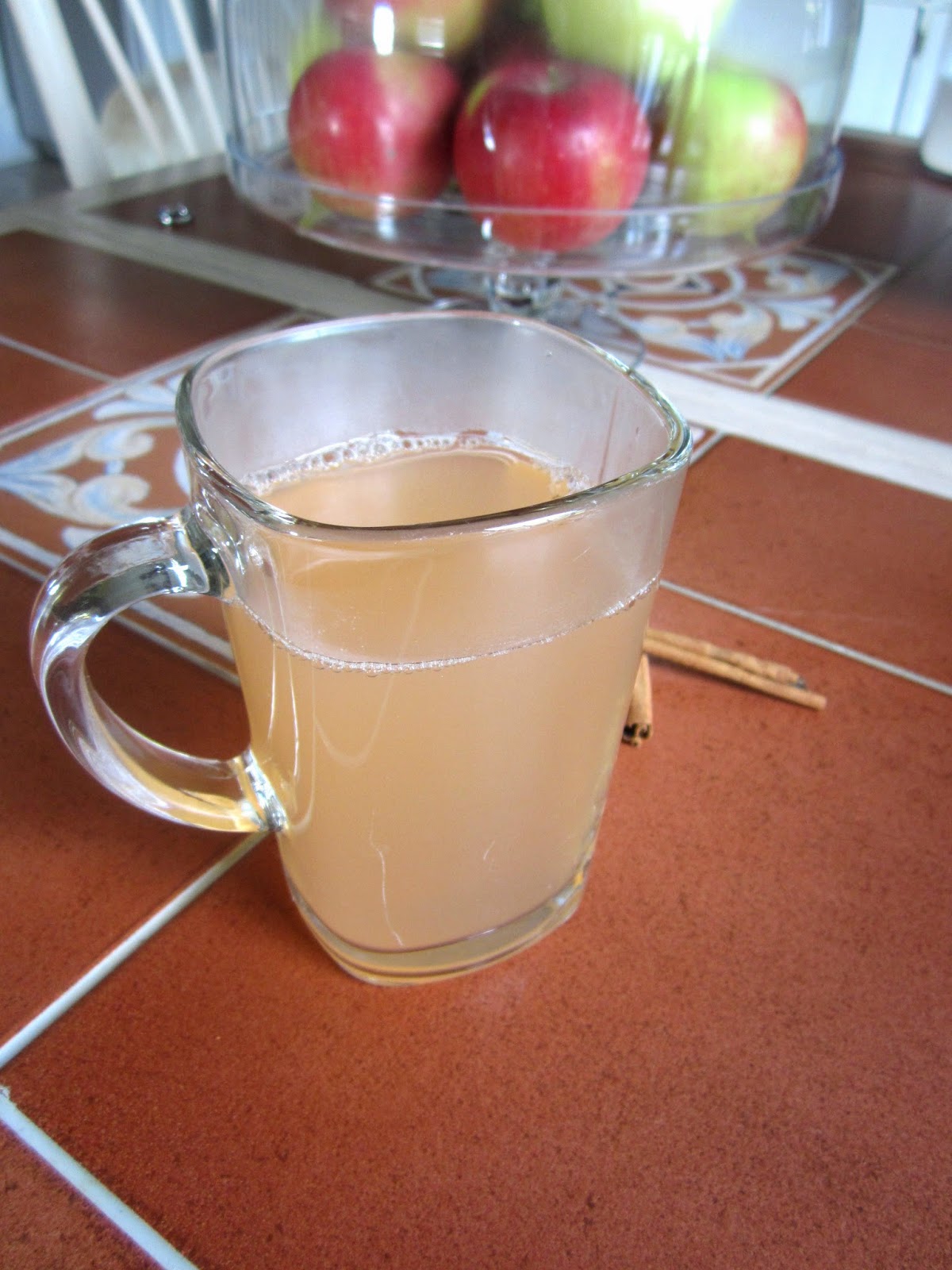
And now I have so many dang apples everywhere, on almost every surface of my kitchen. SO. MANY. APPLES. One pie later and I still had about 50 apples minus the 4 little guys it took to make that pie. I was doing my best to eat them raw, but the apple situation was getting to be a real problem. So I decided to make homemade cider. And this was a good decision. I used ten whole apples, which greatly relieved the apple tension around here. In addition, it was very tasty and a fun peach color.
Here's what I did to make about 6 cups of cider:
Homemade Apple Cider
10 apples, cored and quartered
three cinnamon sticks
water to cover apples
Put apples and cinnamon in a pot. You can definitely add brown sugar, but the apples I used were sweet enough on their own. Cover with water. Bring to a boil and then simmer for 2 hours. Strain with a fine mesh strainer and cheesecloth if you have it. I didn't use a cheesecloth. I just let the apple settle after I used the fine mesh strainer and didn't mix up the cider before using it.
If you want to be just like me when you grow up, you'll make a hot toddy with your homemade cider by adding some bourbon and perhaps a little St. Germain.
Unfortunately I now have a ton of weirdly colored applesauce leftover from cider-making that I don't know what to do with! Give me all your apple recipes, please!
Wednesday, October 8, 2014
Review: Like Water for Chocolate by Laura Esquivel
Like Water for Chocolate is a Mexican love story about Tita de la Garza and her family. Tita has a great talent for cooking all of her family's recipes perfectly. She also possesses a magical power that adds her emotions to her dishes if she is feeling a particularly strong sentiment while preparing that meal. The people who enjoy her dish then feel the same strong emotion, be it lust, anger, sadness, or joy. Tita has no control over this power and only seems half-aware of it, which gets her into a lot of complicated situations with her family members.
Like Water for Chocolate is told in twelve monthly installments, with a pertinent traditional recipe preceding each chapter. Esquivel's style is folklore frank and matter-of-fact, even when the facts of the matter involve crazy magical realism such as a chicken tornado (it's exactly what it sounds like) and death by spectacular causes (which I won't spoil for you). As with most folk stories, it is sometimes bizarre, sometimes hilarious, sometimes heartbreaking.
A while ago I found this BuzzFeed list (love BuzzFeed book lists!). As I was looking through these awesome titles, I started to realize that Like Water for Chocolate could easily have been on this list. It has some of the same components as the list's other books that have sparked someone's "feminist awakening." Like Water for Chocolate is totally focused on the women of the de la Garza family. Tita's Mama Elena has been head of the house since Tita's father died, and Mama Elena only has daughters, making their house and ranch and story very femme-centric. All the main characters are women: women obeying other women, learning from other women, helping each other, fighting each other for supplementary, passive male love-interest characters. While civil war Mexico was undoubtedly a patriarchal society, Like Water for Chocolate demonstrates how war has often pulled countries away from domestic patriarchy to literal matriarchy.
Like Water for Chocolate also explores female sexuality, highlighting the women's desires more than their male lovers. Apart from this feminist-approved treatment of sexuality, this bittersweet tale boasts female characters that take charge of their own futures. At first Tita tries to follow tradition even though it causes her pain, separating her from her beloved Pedro. Eventually she throws tradition to the wind and goes after what she wants. Tita's sister Gretrudis, who runs away from home to chase a handsome soldier after eating a delicious meal made by Tita that happened to be drenched in lust, becomes a general in the Mexican army, so it's not just domestic life that doesn't adhere strictly to traditional gender roles in Esquivel's tale.
Whether you're into feminist awakenings or not, you should definitely read Like Water for Chocolate, particularly if you're into any of the following: Mexican food, sexual tension, crazy mothers, sister rivalry, magical cooking powers, chicken tornadoes, ghosts, interesting deaths, or everlasting love. And if none of that interests you, I'm not sure what type of friendship we could have.
Thursday, August 7, 2014
Reading List
The list of books I want to read is constantly a stressful situation for me. I find myself overwhelmed by the number of titles on my own bookshelf that I haven't read. Working in a library doesn't help either. At any given time I have about 20 books and 10 DVDs checked out. When I see a book I think looks interesting, I check it out. I'm not a speed reader, though, so the pile of unread library books in my house is always much larger than my number of free hours. However, I am determined to make a dent in my to-be-read list in the last weeks of summer. Here's what is on the agenda.
1. You Feel So Mortal: Essays on the Body by Peggy Shinner
A middle-aged, Jewish lesbian's meditation on her body. I have read the first essay in this collection, "Family Feet", and honestly I wasn't terribly impressed. The voice was much too self-pitying for me. I want to read at least one more of the essays to see if it gets better because it seemed to have so much potential.
2. Atonement by Ian McEwan
Recommended to me by my sister Jessica, my mom, and my friend Mary, this novel covers a good deal of the life of an upper-middle-class girl whose misunderstanding of adult situations changes everyone's lives around her and leaves her in need of atonement.
3. The Dud Avocado by Elaine Dundy
A young American woman travels to Paris. I came across this title in the preface of the new edition of Chocolates for Breakfast. In addition to comparing The Dud Avocado to the book which the author was prefacing, she also likened it to The Bell Jar and The Catcher in the Rye. If someone claims a book is similar to Pamela Moore's or Sylvia Plath's works, that's really all I need to place it at the top of my reading list. I also just think I like books with my favorite foods in the titles.
4. A Girl is a Half-Formed Thing by Eimear McBride
I just read this blogger's review and now I am intrigued. It seems like the young female version of Ulysses. Like Chocolates for Breakfast, it is back in print after being forgotten for 50ish years. McBride is Irish, too. I'm sold.
(Update: 2013 was the first year this was published. McBride wrote it 9 or 10 years ago. My apologies.)
5. The Feminine Mystique by Betty Friedan
What sort of feminist and Mad Men fan can I really claim to be if I don't read this revolutionary and legendary text that influenced Matthew Weiner as well as a generation of second-wave feminists?
6. Half the Sky: Turning Opression into Opportunity for Women Worldwide by Nicholas D. Kristof and Sheryl WuDunn
A journalistically-styled nonfiction written by a husband-wife team about women's issues around the world. I received this as a birthday present from my friend Mathew, so I really should put it to use.
7. Gift from the Sea by Anne Morrow Lindbergh
This is a self-reflective, prose-like set of essays written by Charles Lindbergh's wife is a thoughtful evaluation of her own experiences as a mother and wife who has personal ambitions in addition to her family obligations. I have read the first half of this twice and would really like to make myself finish it. I've talked about it a little here already.
8. One L by Scott Turow
Turow's memoir of his first year at Harvard Law. This is another book of which I have read almost half. This one was recommended somewhere on some sort of informative "so you want to go to law school" list, which I do, so I thought I better. While the experiences of a Stanford-educated man in the 1970s might differ quite a bit from a Midwest woman in 2014, I doubt law school has changed fundamentally. It's probably still just as stressful, competitive, draining, and rewarding as Turow makes it out to be. Right, Megan, my suffering law student friend? :)
9. The Alchemist by Paulo Coelho
My dad has already read my copy of this and recommended it. I don't know much about it except my dad described it as Siddartha-esque and Wikipedia says it's about a young shepherd in search of an Egyptian treasure.
10. Como Agua Para Chocolate by Laura Esquivel
I read this amazing book recently in English (Like Water for Chocolate) at my sister Jill's recommendation. It is a Mexican love story centered around family recipes with some bizarre magical realism thrown in. I think it would be rewarding (and challenging) to read it in the original Spanish and make comparisons.
I'll stop at ten.
Have you read any of these? Any thoughts? Where should I start?? (Help!)
1. You Feel So Mortal: Essays on the Body by Peggy Shinner
A middle-aged, Jewish lesbian's meditation on her body. I have read the first essay in this collection, "Family Feet", and honestly I wasn't terribly impressed. The voice was much too self-pitying for me. I want to read at least one more of the essays to see if it gets better because it seemed to have so much potential.
2. Atonement by Ian McEwan
Recommended to me by my sister Jessica, my mom, and my friend Mary, this novel covers a good deal of the life of an upper-middle-class girl whose misunderstanding of adult situations changes everyone's lives around her and leaves her in need of atonement.
3. The Dud Avocado by Elaine Dundy
A young American woman travels to Paris. I came across this title in the preface of the new edition of Chocolates for Breakfast. In addition to comparing The Dud Avocado to the book which the author was prefacing, she also likened it to The Bell Jar and The Catcher in the Rye. If someone claims a book is similar to Pamela Moore's or Sylvia Plath's works, that's really all I need to place it at the top of my reading list. I also just think I like books with my favorite foods in the titles.
4. A Girl is a Half-Formed Thing by Eimear McBride
I just read this blogger's review and now I am intrigued. It seems like the young female version of Ulysses. Like Chocolates for Breakfast, it is back in print after being forgotten for 50ish years. McBride is Irish, too. I'm sold.
(Update: 2013 was the first year this was published. McBride wrote it 9 or 10 years ago. My apologies.)
5. The Feminine Mystique by Betty Friedan
What sort of feminist and Mad Men fan can I really claim to be if I don't read this revolutionary and legendary text that influenced Matthew Weiner as well as a generation of second-wave feminists?
6. Half the Sky: Turning Opression into Opportunity for Women Worldwide by Nicholas D. Kristof and Sheryl WuDunn
A journalistically-styled nonfiction written by a husband-wife team about women's issues around the world. I received this as a birthday present from my friend Mathew, so I really should put it to use.
7. Gift from the Sea by Anne Morrow Lindbergh
This is a self-reflective, prose-like set of essays written by Charles Lindbergh's wife is a thoughtful evaluation of her own experiences as a mother and wife who has personal ambitions in addition to her family obligations. I have read the first half of this twice and would really like to make myself finish it. I've talked about it a little here already.
8. One L by Scott Turow
Turow's memoir of his first year at Harvard Law. This is another book of which I have read almost half. This one was recommended somewhere on some sort of informative "so you want to go to law school" list, which I do, so I thought I better. While the experiences of a Stanford-educated man in the 1970s might differ quite a bit from a Midwest woman in 2014, I doubt law school has changed fundamentally. It's probably still just as stressful, competitive, draining, and rewarding as Turow makes it out to be. Right, Megan, my suffering law student friend? :)
9. The Alchemist by Paulo Coelho
My dad has already read my copy of this and recommended it. I don't know much about it except my dad described it as Siddartha-esque and Wikipedia says it's about a young shepherd in search of an Egyptian treasure.
10. Como Agua Para Chocolate by Laura Esquivel
I read this amazing book recently in English (Like Water for Chocolate) at my sister Jill's recommendation. It is a Mexican love story centered around family recipes with some bizarre magical realism thrown in. I think it would be rewarding (and challenging) to read it in the original Spanish and make comparisons.
I'll stop at ten.
Have you read any of these? Any thoughts? Where should I start?? (Help!)
(My and Luna's favorite window in our new house)
Saturday, July 26, 2014
You should yoga
Oh hey. It's been a while.
Reading has fallen between the cracks of summer lately. Instead I've been walking Luna every night, enjoying delicious food made by my personal chef (Jarrod), getting out of town every chance we get, and practicing yoga. So much yoga.
I am addicted to yoga. There. I said it. I realized a few months ago when I had to make a choice between a friend's birthday lunch and my Thursday lunchtime yoga class just how true this is. It was a difficult decision. Of course I chose the lunch because people matter more than yoga, but it was a close one. Runners becoming addicted to their preferred exercise is common, but I didn't realize after just a few months of regular yoga practice that I would develop physical cravings for downward dogs if it got to be too late in the day and I hadn't had my yoga fix yet.
I recommend yoga for everything to everyone now. Back pain? You should do yoga. Diabetes? Yoga helps that! Stressed? Have a headache? Hungover? Insomnia? Digestive issues? Yoga! It's a miracle-worker. It also can be a really great strength-training routine, which makes it a great body image booster.
It's so important for a woman to find an exercise she likes not only for health and mood benefits, but because strength is incredibly empowering. After almost a year of daily yoga, I have noticed a big difference in my upper body strength. Things I couldn't lift on my own I now can. Being able to say, "No, I've got it," is a great feeling. I can carry my own suitcases and can keep up in a casual rowing competition among (male) friends on a float trip. That feeling of independence and self-reliance can be gained from any strength-training exercise, but I love yoga because I am able to listen to my body in ways I can't when I'm running or using some gym machine. Yoga lets you push yourself or back off if you need to that day. Yoga never seems like a chore.
Ok, so you're ready to start, right? The spectacular news is that you can start right this minute. All you need is a little space and whatever device you are reading this on. While a mat is very helpful, it's not vital. The video below is the first day of a really fun 30-day yoga challenge from doyouyoga.com that you can find on YouTube. The videos are around 15 minutes long and focus on different areas to strengthen and stretch every day.
I convinced Jarrod to do this challenge with me, and he loves it and is a total yogi now. :) And to the Walmart check-out guy giving Jarrod crap about buying a yoga mat, yoga knows no gender. Yoga is for everyone.
Reading has fallen between the cracks of summer lately. Instead I've been walking Luna every night, enjoying delicious food made by my personal chef (Jarrod), getting out of town every chance we get, and practicing yoga. So much yoga.
I am addicted to yoga. There. I said it. I realized a few months ago when I had to make a choice between a friend's birthday lunch and my Thursday lunchtime yoga class just how true this is. It was a difficult decision. Of course I chose the lunch because people matter more than yoga, but it was a close one. Runners becoming addicted to their preferred exercise is common, but I didn't realize after just a few months of regular yoga practice that I would develop physical cravings for downward dogs if it got to be too late in the day and I hadn't had my yoga fix yet.
I recommend yoga for everything to everyone now. Back pain? You should do yoga. Diabetes? Yoga helps that! Stressed? Have a headache? Hungover? Insomnia? Digestive issues? Yoga! It's a miracle-worker. It also can be a really great strength-training routine, which makes it a great body image booster.
It's so important for a woman to find an exercise she likes not only for health and mood benefits, but because strength is incredibly empowering. After almost a year of daily yoga, I have noticed a big difference in my upper body strength. Things I couldn't lift on my own I now can. Being able to say, "No, I've got it," is a great feeling. I can carry my own suitcases and can keep up in a casual rowing competition among (male) friends on a float trip. That feeling of independence and self-reliance can be gained from any strength-training exercise, but I love yoga because I am able to listen to my body in ways I can't when I'm running or using some gym machine. Yoga lets you push yourself or back off if you need to that day. Yoga never seems like a chore.
Ok, so you're ready to start, right? The spectacular news is that you can start right this minute. All you need is a little space and whatever device you are reading this on. While a mat is very helpful, it's not vital. The video below is the first day of a really fun 30-day yoga challenge from doyouyoga.com that you can find on YouTube. The videos are around 15 minutes long and focus on different areas to strengthen and stretch every day.
I convinced Jarrod to do this challenge with me, and he loves it and is a total yogi now. :) And to the Walmart check-out guy giving Jarrod crap about buying a yoga mat, yoga knows no gender. Yoga is for everyone.
If you need more, I love all of Tara Stiles' videos on YouTube. Just search "Tara Stiles".
Do you yoga? You should yoga.
Friday, June 6, 2014
Strawberry Coconut Sparkler
Finally it's warming up in Missouri! Let's do everything outside: eat, drink, read, walk, run, bike, attend concerts, and shop at farmers' markets. I love the sunshine and fresh air activities, but a full day outside can leave me feeling tired and dehydrated. As I'm sure you've been told by now, coconut water is a great natural hydrator thanks to generous amounts of potassium. Rehydrating with coconut water gives you a burst of energy without the slump of caffeine or sugar energizers. Sounds awesome! Unlucky for me, I don't care for the taste of coconut water. But lucky for me (and you), I came up with this simple, refreshing electrolyte cocktail so we can both reap coconut water's many benefits enjoyably. Fresh strawberries naturally sweeten the coconut water with no extra sugar or syrups. It tastes like a light and clean Crush strawberry soda but leaves you feeling energized and healthy instead of sugar stoned.
Strawberry Coconut Sparkler
handful of fresh or frozen strawberries
plain coconut water
club soda or plain sparkling water
Slice the berries and put them in a mason jar or pitcher with the coconut water and let the strawberries infuse in the coconut water for a few hours or overnight in the fridge. The longer it sits, the more intense the strawberry flavor. Fill your glass one-third full of coconut concoction, add ice, and top with club soda.
Stay hydrated, my friends.
Strawberry Coconut Sparkler
handful of fresh or frozen strawberries
plain coconut water
club soda or plain sparkling water
Slice the berries and put them in a mason jar or pitcher with the coconut water and let the strawberries infuse in the coconut water for a few hours or overnight in the fridge. The longer it sits, the more intense the strawberry flavor. Fill your glass one-third full of coconut concoction, add ice, and top with club soda.
Stay hydrated, my friends.
Wednesday, May 21, 2014
Review: The Lowland by Jhumpa Lahiri
I have not read any of Jhumpa Lahiri's works before, but I had heard goods things about them from various readers, and I noticed several copies of The Lowland on hold at my workplace, an academic library. I also saw that it had been mentioned in the New York Times Book Review. This led me to believe I would be reading an important contemporary novel of significant value that would in some way or another enrich my literary life. I'm not going to sugar-coat it; this book was a terrible disappointment for me.
Subhash and Udayan are very close brothers who grew up together in Calcutta in the 1960s, when that part of India was rocked with a rebellion movement. Udayan, the younger brother by less than a year, is secretly involved in this violent revolutionary attempt, looking to Mao and Che Guevara for inspiration. Subhash is an academic who goes to the United States to pursue doctoral studies in environmental chemistry. Shortly after Udayan marries the lonely and philosophical Gauri without his parents' permission, the rebellion swallows him. His parents, brother, and wife, four family members who are so isolated from one another geographically or emotionally that they are almost strangers, must learn to exist without their beloved son, almost-twin, and soulmate. Strong themes of isolation and regret fill the pages with little to no forgiveness and love to balance.
The main problem with The Lowland is that nothing happens and it takes a long time to do it. Lahiri sets up a wonderful story that has so much potential, but just when you think the plot begins to climb to an exciting level of complexity, it falls flat and remains at that plateau for the characters' entire stories. I love Irish literature, so I'm always up for a good, devastatingly sad story, but The Lowland is not that. It has one heartbreaking event that the characters languish in, refusing to heal and evolve in their mourning. Other scenes had the latency to be deliciously sad, but their muted sentimentality left them completely anticlimactic. The characters all make very interesting life choices, but the author fails to satisfactorily explore their motives and emotions. The back of the cover promised "shimmering" writing with "uncommon elegance." I was totally unimpressed with Lahiri's writing. Of course it was written well enough, but not a single phrase struck me with its beauty, no analogy swept me away with any sort of originality.
In her discussion of the book, Emma of A Beautiful Mess suggests that Gauri is an example of "feminism gone wrong." I assume she means Gauri used the freedom feminism advocates for evil or that she took advantage of her freedom to do "wrong" things. While I really dislike the phrase "feminism gone wrong" to describe this character's actions, in some regards I agree with Emma. Gauri could represent the past and present fear of women with passions for their careers and the belief that these women are selfish and slightly monstrous. Almost everything Gauri does after Udayan dies is self-serving and loveless. Traditional female roles do not suit her; her one lasting passion is studying philosophy. Gauri could be a cautionary tale of career women who reject family by allowing a purpose outside the family unit to overtake their traditional responsibilities, thus destroying the lives of all the family involved. While I agree that Gauri could be a representation of this fear of feminism, her story is not the reality of most passionate career women in real life, and it is no fault of feminism that Gauri had the opportunities to be so selfish.
Have you read The Lowland? What did you think?
Friday, May 9, 2014
Beauty Patch
Self-image is an important issue. After watching the documentary Miss Representation, I have become more aware of the media's effect on self-image and the importance of positive body image for both men and women. I had obviously been aware of self-image issues ever since I realized pants came in different sizes, but poor self-image seemed like a secretive and shameful thing just as much as the body itself can be. That's one thing I loved about The Good Body. It made body image a gathering point for women everywhere instead of the alienating sin of individuals.
To me, Dove's Real Beauty campaign has also been attempting to unite women against poor self-image while celebrating unique differences. Thanks, Dove, for creating commercials aimed at reversing the damage on body image that the media often causes. It excites me that other brands are realizing the incredible power in showing differently-sized women and leaving the photographs untouched, like American Eagle's Aerie line.
This video from Dove's campaign about a product called the "beauty patch" blew me away. I teared up a little by the end; it's that beautiful and inspiring. Go ahead. Watch it and get inspired to love yourself and others.
Monday, April 14, 2014
Aztec Mocha
This drink is inspired by the movie Chocolat. That movie has three of my favorite things: themes of acceptance, Johnny Depp, and chocolate. And not just any chocolate. Fancy French chocolate made from an ancient family recipe originating from the first chocolate lovers themselves: the Aztecs.
After watching this movie with my dear friend Megan in college, we set out to make our own chocolate. And not just any chocolate. Spicy Aztec chocolate with dashes of cayenne and cinnamon. I have been mildly obsessed with spicy chocolate ever since.
Chocolat is set in the season of Lent, too, so it makes sense to share this mocha recipe now in Lent's final week. The main character moves to a small, highly religious French town with her daughter and opens a chocolate shop in the middle of Lent, when the whole town gives up sweets. This leaves her less than popular. Hopefully you will still like me after I share this recipe if you are giving up sweets or chocolate for Lent this year. :) You know, it would make the perfect Easter morning celebratory drink.
First thing's first, you're going to need a good chocolate syrup. I demand that you make your own following this recipe as it has the best and darkest flavor any chocolate syrup has ever dared to offer. Plus it has no high fructose corn syrup or other weird chemicals. It's so simple to make, just equal parts white sugar, cocoa powder, and water with a dash of vanilla and a pinch of salt.
Aztec Mocha
makes two
3 Tablespoons chocolate syrup
1/2 teaspoon cinnamon
pinch of cayenne pepper to heat preference
strong coffee or espresso
warmed half & half or preferred milk
optional (but not really) whipped cream and cinnamon for garnish
Heat the syrup on low in a pan (or leave some in the pan after making your own chocolate syrup) and add in spices. You could probably just stir in the spices to cold syrup, but I haven't tried it, so I'm not sure if it tastes the same.
Spoon the syrup into mugs, add the coffee and steamed milk, and garnish with whipped cream and cinnamon and pretend you are drinking it with Johnny Depp in a cute French village.
Sunday, April 6, 2014
Feminist Critique: Hozier "Cherry Wine"
I am in love. His name is Hozier and he's an artist. His voice is a smooth shot of rich espresso. His lyrics, coupled with an acoustic and soulful sound, summon a deep spirituality. His poetic lyrics describe women as powerful and not in the typical femme fatale way. Hozier's songs talk about women as ethereal creatures with worshipful wonder and helplessness. While he uses Biblical references in almost every song, it's as if woman is his deity.
I know you're thinking to yourself, but Julie, isn't worshiping women just another form of objectifying them? Doesn't that mean Hozier is still refusing to see women as his equal? And I would have to answer, yes, you're probably right. But pipe down. You're ruining a perfectly nice song. :) I also think that there is more to the songs than simple objectification since Hozier does not expound on a woman's beauty and sex appeal but of her mystery and powers. If that does not reassure you, at least there is no disrespect toward women in any of his songs.
His song Cherry Wine even has some traditional gender role reversal, which is how I knew our love was real.
The narrator is in an abusive relationship, and the lyrics are clearly talking about physical signs of abuse, but these could be metaphorical for the emotional bruising taking place. Either way, the narrator holds no anger, forgives freely, and remains devoted and submissive to this destructive woman. I'm definitely not advocating husband-beating, but I still find the role reversal intriguing.
Enjoy this song and check out his others! I'd love to hear your opinions of Hozier as an artist and his lyrics in relation to feminism.
Cherry Wine ~ Hozier
Her eyes and words are so icy
Oh but she burns
Like rum on the fire
Hot and fast and angry
As she can be
I walk my days on a wire.
It looks ugly, but it's clean.
Oh mama, don't fuss over me.
The way she tells me I'm hers and she is mine
Open hand or closed fist would be fine.
The blood is rare and sweet as cherry wine.
Calls of guilty fall on me
All while she stains
The sheets of some other
Thrown at me so powerfully
Just like she throws with the arm of her brother.
But I want it, it's a crime
That she's not around most of the time.
The way she shows me I'm hers and she is mine
Open hand or closed fist would be fine
Blood is rare and sweet as cherry wine.
Her fight and fury is fiery
Oh but she loves
Like sleep to the freezing
Sweet and right and merciful
I'm all but washed
In the tide of her breathing.
And it's worth it, it's divine
I have this some of the time.
The way she shows me I'm hers and she is mine
Open hand or closed fist would be fine
The blood is rare and sweet as cherry wine
I know you're thinking to yourself, but Julie, isn't worshiping women just another form of objectifying them? Doesn't that mean Hozier is still refusing to see women as his equal? And I would have to answer, yes, you're probably right. But pipe down. You're ruining a perfectly nice song. :) I also think that there is more to the songs than simple objectification since Hozier does not expound on a woman's beauty and sex appeal but of her mystery and powers. If that does not reassure you, at least there is no disrespect toward women in any of his songs.
His song Cherry Wine even has some traditional gender role reversal, which is how I knew our love was real.
The narrator is in an abusive relationship, and the lyrics are clearly talking about physical signs of abuse, but these could be metaphorical for the emotional bruising taking place. Either way, the narrator holds no anger, forgives freely, and remains devoted and submissive to this destructive woman. I'm definitely not advocating husband-beating, but I still find the role reversal intriguing.
Enjoy this song and check out his others! I'd love to hear your opinions of Hozier as an artist and his lyrics in relation to feminism.
Cherry Wine ~ Hozier
Her eyes and words are so icy
Oh but she burns
Like rum on the fire
Hot and fast and angry
As she can be
I walk my days on a wire.
It looks ugly, but it's clean.
Oh mama, don't fuss over me.
The way she tells me I'm hers and she is mine
Open hand or closed fist would be fine.
The blood is rare and sweet as cherry wine.
Calls of guilty fall on me
All while she stains
The sheets of some other
Thrown at me so powerfully
Just like she throws with the arm of her brother.
But I want it, it's a crime
That she's not around most of the time.
The way she shows me I'm hers and she is mine
Open hand or closed fist would be fine
Blood is rare and sweet as cherry wine.
Her fight and fury is fiery
Oh but she loves
Like sleep to the freezing
Sweet and right and merciful
I'm all but washed
In the tide of her breathing.
And it's worth it, it's divine
I have this some of the time.
The way she shows me I'm hers and she is mine
Open hand or closed fist would be fine
The blood is rare and sweet as cherry wine
Monday, March 31, 2014
Review: Chocolates for Breakfast by Pamela Moore
I always hesitate to say that I loved a book or movie but I think I loved this book. Just back in print after 50-some years, Chocolates for Breakfast is a sexier version of The Bell Jar and Pamela Moore parallels Sylvia Plath in that she is also a young woman in a rough marriage tortured by depressive bouts and eventual suicide. Pamela Moore touches on many of the same coming-of-age themes of other young adult favorites like The Catcher in the Rye and The Perks of Being a Wallflower. In Plathian fashion, Moore killed herself at the age of twenty-six, eight years after Chocolates for Breakfast was first published in 1956.
The risque novel begins with fifteen-year-old Courtney Farrell holding an argument with her boarding school roommate Janet Parker, whose hobbies include lounging in the nude and getting kicked out of schools. Janet is arguing that Courtney is too involved with one of the female English teachers who tutors the bright and bored Courtney in the evenings. Janet tells her that the other girls are starting to think Courtney has a crush on Miss Rosen. Courtney denies it but does seem to find her relationship with Miss Rosen very important, so much that she goes into a depression when Miss Rosen says Courtney is no longer allowed to visit her. Courtney leaves Scaisbrooke for her actress mother's trendy apartment in Hollywood and then on to New York City where Courtney departs from her childhood quickly.
Reading the book feels as luxurious as the title sounds. Cocktail parties, dates with older men, and sleeping in til early afternoon fill the novel. Courtney's life as daughter of an actress mother and a rich father means decadence to the point of surrealism. What struck me about Chocolates was Moore's voice. She was seventeen when she wrote it, eighteen when it was published, so Moore was writing in the moment. She wasn't looking back and remembering how she felt in her transition from child to woman; she was in that change. She still wasn't sure how everything would end up for her, but she imagines for Courtney a hopeful and happy ending. Some scenes could be criticized as cheesy and highly romanticized, but I had to smile in appreciation of the too-perfect scenes because that is exactly what a seventeen-year-old girl would write.
There are obviously a great many differences between Chocolates and Bell Jar. Moore's novel is not told in the first person, and although we are offered a lot of clues about what Courtney and occasionally other characters are thinking, it is certainly not the "I just stepped into the mind of a crazy girl" experience that Plath gives a reader. Whereas Plath is very raw in her descriptions of depression and suicidal thoughts, Moore romanticizes such things right alongside love affairs, champagne for breakfast, and fancy dinners. With Esther in The Bell Jar the reader feels as though she knows what led Esther to want death. With the characters in Chocolates for Breakfast, we are only looking in on their oversexed, scotch-drenched teenage lives and can only guess what they are truly feeling.
For reasons unexplained to myself, I loved this book. Maybe it's because the review where I learned of it billed Chocolates as a lost classic, and I was eager to be a first to appreciate it in its rediscovery. Maybe I just love the sound of chocolate. Or maybe I have a fascination with coming-of-age stories. Whatever the reason, if you loved The Bell Jar you will love Moore too.
Subscribe to:
Posts (Atom)